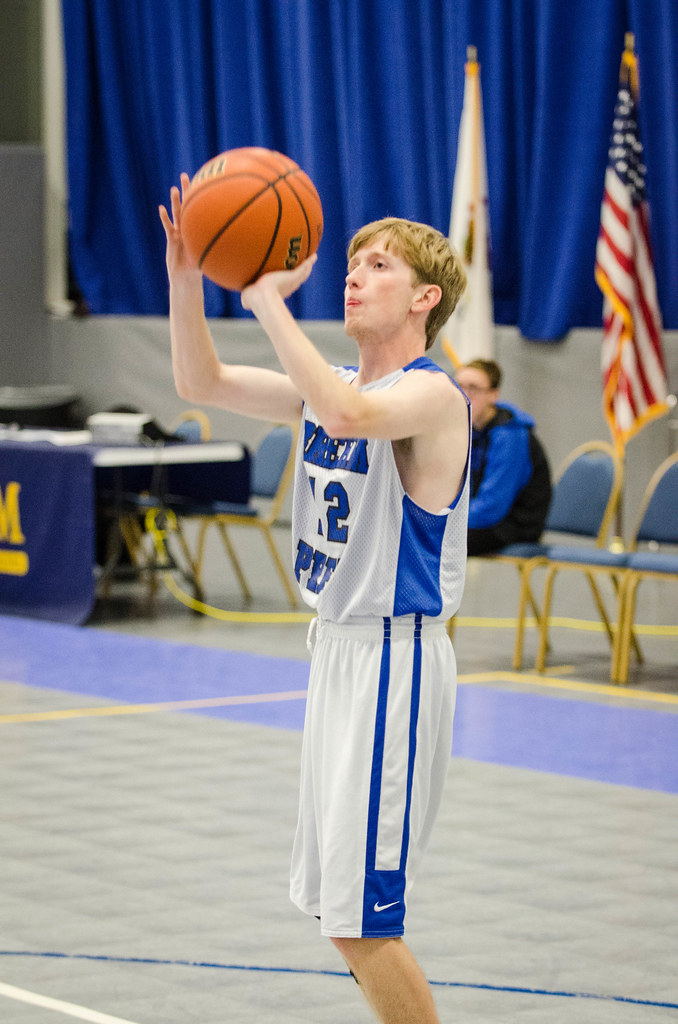
Introduction by Jacqueline Danielle
You know when someone just gets it? That is Andrew Waugh. I met him at Brehm during a summer program, and even then he carried a notebook of ideas that would eventually become Beyond the Bell. He is reflective beyond his years, dry in his humor, competitive on the court and course, and deeply loyal to his mentors and family.
I still tease him about the fact that I have not officially met his parents. He talks about them with admiration. His dad was a PGA teaching professional and entrepreneur, someone who could take a swing and turn it into a life lesson. His mom was a vice president in a male dominated industry during the 90s and early 2000s, outworking and outthinking everyone around her. From them Andrew inherited a go getter mindset and an entrepreneurial drive.
He also lives with ADHD and slow processing speed, which he has turned into a tool. It makes him deliberate, thoughtful, and able to see connections others might miss. His mentors, Dr. Richard Collins, Jeremy Robbins, and yes, myself, have shaped him. The Thai Scholars of TS68, fun and endlessly curious, reminded him why he chose education.
At 27, Andrew is the Founder and CEO of Beyond the Bell and an Ed.D. candidate in Organizational Leadership. He is just starting his program, but he is already asking the questions schools need. This is our conversation.
Interview conducted by Jacqueline Danielle (JD)
JD: Andrew, you turned 27 this past January and are already stepping into an Ed.D. program. What is driving you at this stage of your career?
AW: I have always been wired to move forward. My mom worked in an industry dominated by men during the 90s and early 2000s, and she earned her way up to Vice President of her territory. Watching her taught me that you do not wait for permission to succeed, you create your path. My dad, who was a PGA teaching professional, gave me both the entrepreneurial spirit and the love of golf. He was also a hell of a basketball player in his own right. Together, they gave me a blueprint for drive, creativity, and persistence. That foundation keeps me chasing goals, even when the path is long.
JD: When you think about your dissertation, what excites you most?
AW: It is original work. “The Second Enrollment” is not a phrase you will find in the boarding school lexicon. It is my way of naming the point where students and families decide to stay, not just to come. Boarding schools talk a lot about admissions, but retention is just as critical. I want to study how student life and residential programming shape that second decision. What excites me is the chance to connect research with practice in real time.
JD: You’ve often mentioned mentors like Dr. Richard Collins and Jeremy Robbins. What role have they played?
AW: They have given me something rare: honest belief. Dr. Collins sees leadership not just as management, but as stewardship, and he has challenged me to grow into that vision. Jeremy Robbins has always encouraged me to trust my instincts, especially with student programming. And of course, Jacquie, you stepped away from the boarding school world for a year and a half, but your ability to step back in and still see the whole landscape has been a model for me. These mentors remind me that leadership is as much about reflection as action.
JD: You’ve also been candid about ADHD. How do you view it now?
AW: I see it as a tool, not a setback. My brain does not move in straight lines. It jumps, it races, it builds connections that might not seem obvious at first. That can make me restless, but it also makes me creative. ADHD is why I can plan student orientation while sketching out a research study and still find energy to play pickup with the kids on the court. It is part of what makes me who I am.
JD: Sports have clearly shaped you. Where did golf and basketball first enter the picture?
AW: Golf was in my blood. My dad lived the game, so the course was like an extension of home. But basketball was also part of his story. He was a pretty damn good player in his private school days, and I wanted to follow that fire. Golf taught me patience, basketball taught me intensity. Together, they shaped how I see competition, resilience, and leadership.
JD: How do those lessons show up in your leadership style?
AW: In golf, you cannot let one bad hole ruin the round. You learn to reset and keep walking. In basketball, every possession matters. Whether it is walking the course or running the court, you realize the game is bigger than one hole or one possession. You keep showing up, making the next play, and that is how you win over time. That mindset translates directly into education and leadership.
JD: You are also a reader. How do books influence your outlook?
AW: Literature keeps me grounded. I have read everything from Thoreau’s Walden to James Baldwin’s essays, from Into the Wild to The Brothers Karamazov. Each book pulls something different out of me. Baldwin challenges my sense of justice, Dostoevsky my sense of morality, Thoreau my sense of simplicity. Reading helps me ask bigger questions than my own little corner of the world can provide.
JD: Where does music fit in?
AW: Music has always been fuel for me. Jason Isbell especially. In his song Relatively Easy he sings, “Compared to people on a global scale, our kind has had it relatively easy.” That lyric has always stuck with me. It reminds me that while my challenges feel big, I still carry privilege and opportunity, and that perspective should drive me to do something meaningful with it.
JD: You’ve spoken about Thai Scholars, your TS68 class. What did they teach you?
AW: They taught me about courage and curiosity. These are students who traveled across the world to pursue education in a different culture, and they did it with grace and humor. I admired their willingness to lean into discomfort. TS68 reminded me why I became an educator: to meet students at the crossroads of transition and help them see their own strength.
JD: What does Beyond the Bell mean to you?
AW: It is my creative outlet. It is part blog, part consulting, part storytelling platform. It gives me the space to think out loud about student engagement and retention. More than that, it is about giving voice to the experiences that often sit in the margins of traditional education conversations.
JD: You’re young, but people say you reflect beyond your years. Where does that come from?
AW: Probably from my family. My mom and dad are very different but equally intense. My mom’s career in a male-dominated field showed me toughness and vision. My dad’s entrepreneurship showed me how to bet on yourself. And my stepdad and brother remind me not to take myself too seriously. Those dynamics push me to reflect, but also to laugh at myself when I need to.
JD: Do you ever feel pressure from being so ambitious at a young age?
AW: Sometimes. Ambition can feel heavy if you forget to enjoy the process. But I try to pace myself. I think less about balancing everything and more about finding the right rhythm. It is like running the court — you cannot sprint the whole game, but you also cannot walk. You find your pace, and you trust it will carry you.
JD: What role does humor play in your leadership?
AW: A big one. I have a dry sense of humor, and I use it often. Students know I will be serious when I need to be, but I also believe laughter builds trust. It is hard to build community without humor.
JD: If you had to name one philosophy of education you live by, what would it be?
AW: Engagement equals belonging, and belonging equals retention. If students feel like they belong, they will stay, grow, and thrive. My job is to create the spaces where that belonging can happen.
JD: How do you bring students into that process?
AW: You give them real responsibility. Student leaders should not just hand out pizza at an event. They should shape the culture, mentor younger peers, and run initiatives. When students own their environment, the school becomes theirs in a deeper way.
JD: What about when things go wrong?
AW: You keep showing up. I go back to sports. You miss a shot, you reset and defend the next play. You hit a bad drive, you grind to make par anyway. You cannot lead if you disappear when things get messy.
JD: How do you see yourself evolving in the next decade?
AW: I want to lead a boarding school. I want to connect research, student life, and admissions into one mission. And I want to keep writing and contributing to the broader conversation.
JD: Who do you hope to impact most?
AW: Students. Always students. If I do not center them, then all the programs, research, and strategies mean nothing.
JD: If you could send one message back to your younger self, what would it be?
AW: Trust your pace. The goals will come, the setbacks will happen, but if you keep walking the course and running the court, you will end up where you are supposed to be.
JD: Final thoughts?
AW: Just gratitude. For mentors like Collins, Robbins, and Jacquie. For my family. For students like TS68 who remind me why this work matters. For the chance to blend golf and basketball, literature and leadership, research and real life. At the end of the day, I am just trying to keep making the next play.
Jacqueline Danielle’s Closing Reflection
There are people who simply see the world differently, and Andrew Waugh is one of them. His ADHD is not a setback but a tool that sharpens his perspective and drives his creativity. He has inherited the entrepreneurial spirit of his father, the competitive streak of his dad’s playing days, and the resilience of his mother who rose to vice president in a male-dominated industry. These qualities shape the way he moves through life and the way he invests in others.
I still remind him that I have not officially met his parents, which feels impossible given how often he speaks about them with such respect and humor. You can feel their presence in the way he carries himself, in the gratitude he shows, and in the loyalty he gives to his family.
What sets Andrew apart is not only his ability to dream but his determination to act. He jokes easily, but he also reflects deeply, and when it is time to step forward he does so without hesitation. He approaches life the same way he approaches the games he loves. Whether walking the course or running the court, he understands that it is never about one hole or one possession. It is about showing up every day, playing the next shot, making the next pass, and trusting that consistency builds victory over time.
At twenty-seven, Andrew shows a wisdom that stretches far beyond his years. He is an athlete, a reader, a builder, and above all a leader who keeps showing up for his students, his mentors, his family, and his community. His story is still unfolding, and the best parts are yet to come.
Leave a Reply